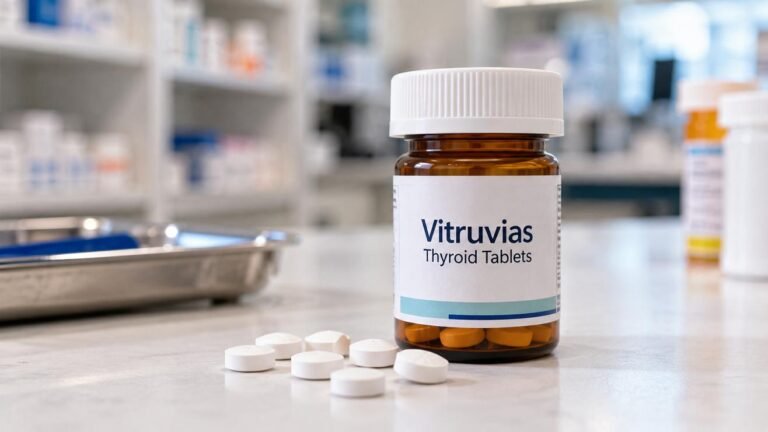



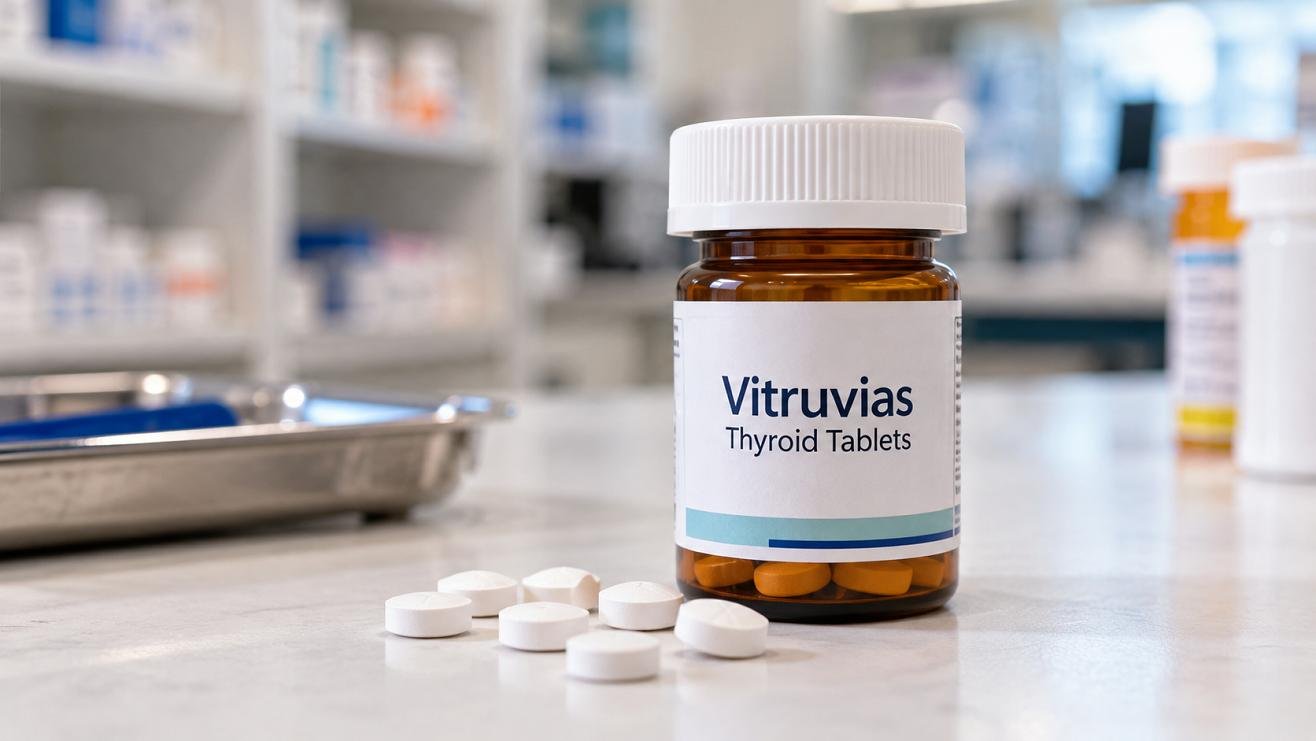
The U.S. Food and Drug Administration has elevated a nationwide recall involving one lot of Vitruvias Therapeutics’ thyroid tablets to a Class I recall, the agency’s most serious recall category, after testing found the tablets could be stronger than intended.
The recall covers Thyroid Tablets, USP 30 mg, from Lot 504950. The product was recalled by Vitruvias in August because testing confirmed the potential for the tablets to be superpotent, meaning they could contain more thyroid hormone than intended. The FDA published the original recall notice Aug. 24.
USA TODAY reported Thursday that the FDA classified the recall as Class I on Sept. 22, 2026. NewsNation also reported this week that the FDA had upgraded the recall to its highest risk level.
What medication is affected?
The recalled product is labeled Thyroid Tablets, USP 30 mg and contains the thyroid hormones levothyroxine (T4) and liothyronine (T3). Unlike conventional synthetic levothyroxine products, the medication is a natural thyroid preparation derived from porcine thyroid glands. It is used to treat hypothyroidism, or an underactive thyroid.
The affected product can be identified using the following information:
- Product: Thyroid Tablets, USP 30 mg
- NDC: 69680-166-00
- Lot: 504950
- Expiration date: Sept. 30, 2026
- Units released: 3,655
- Units sold: 1,955
- Distribution: Nationwide
- Distribution period: Jan. 31, 2025, through Sept. 30, 2025
The FDA’s original recall notice says the lot was distributed nationwide through Vitruvias Therapeutics’ direct accounts.
The recall applies specifically to the identified lot. It should not be interpreted as a recall of every thyroid medication, every levothyroxine product, or every product containing thyroid hormone.
Why did the FDA raise the recall to Class I?
The FDA uses three principal recall classifications based on the potential health hazard.
A Class I recall is reserved for situations in which there is a reasonable probability that use of or exposure to a violative product could cause serious adverse health consequences or death. Class II recalls involve situations in which serious harm is less likely, or effects may be temporary or medically reversible, while Class III recalls involve products that are unlikely to cause adverse health consequences.
The change in classification does not mean that a new batch of tablets was recalled this week. The underlying recall began in August. The significant new development is the FDA’s elevation of that existing recall to Class I.
What is the concern with the tablets?
Vitruvias said testing confirmed the potential for the recalled tablets to be superpotent.
Excess thyroid hormone can produce symptoms associated with an overactive thyroid, or hyperthyroidism. The FDA-published recall notice lists possible effects including weight loss, heat intolerance, fatigue, nervousness, muscle weakness, high blood pressure, chest pain, rapid heart rate and heart rhythm disturbances.
The company specifically identified elderly patients, pregnant women and infants as groups at greater risk, particularly with prolonged exposure.
The FDA notice also said excessive thyroid hormone exposure in older adults can have adverse effects involving the heart. During pregnancy, overtreatment of hypothyroidism has been associated with complications including premature delivery and low birth weight. In infants, overtreatment can negatively affect growth and development.
Importantly, the original recall notice said Vitruvias had not received any reports of adverse events known to be related to the recall as of its publication on Aug. 24.
That means the Class I designation reflects the FDA’s assessment of the potential hazard associated with the recalled product; it does not establish that patients have died or suffered serious injuries from this particular lot.
What should patients do?
Patients who believe they have the recalled tablets should first check the product information against the FDA’s recall details, particularly the NDC number 69680-166-00 and lot number 504950.
The FDA-published recall notice says people currently taking tablets from the recalled lot should not discontinue the medication without contacting their health care provider for guidance or a replacement prescription. Abruptly stopping thyroid hormone treatment without medical advice can itself create health risks, so patients should speak with their prescriber or pharmacist about the appropriate replacement.
Consumers who have questions about the original recall can contact Vitruvias Therapeutics at safety@vitruvias.com or 256-239-9373, according to the FDA notice. The company listed the telephone line as available Monday through Friday from 9 a.m. to 5 p.m. Central Time.
The FDA also directs consumers and health professionals to its MedWatch program for reporting adverse reactions or quality problems involving the product.
Vitruvias has ceased operations
The recall comes as Vitruvias Therapeutics has ceased operations.
The company’s website currently states that Vitruvias Therapeutics Inc. has ceased operations and that all of its products are now owned or distributed by H2-Pharma LLC.
NewsNation reported that Vitruvias had previously notified wholesalers to stop distributing the recalled product and arrange for its destruction. The company had also said it was working with wholesalers to remove the affected lot.
The company shutdown is relevant to consumers seeking information about the recalled medication, but available reporting does not establish that the recall caused Vitruvias to cease operations.
A limited recall, but a higher FDA risk classification
The recall involves one specific lot rather than all Vitruvias thyroid tablets.
FDA records show that 3,655 units were released and 1,955 were sold from the affected lot. The lot was distributed nationally during 2025 and carries an expiration date of Sept. 30, 2026.
The FDA’s Class I classification therefore does not mean that every thyroid medication currently on the market has been determined to pose the same risk. Patients should identify the exact product and lot number rather than relying solely on the medication’s general name.
The distinction is particularly important because several different thyroid medicines are available in the United States, including synthetic levothyroxine products and natural thyroid preparations.
What happens next?
The recalled lot is subject to the consumer-level recall, while distributors and wholesalers have been instructed to stop distributing affected product and arrange for its destruction.
For patients, the immediate issue is determining whether their medication matches the recalled product and, if it does, obtaining guidance from a pharmacist or prescribing clinician about a replacement.
The FDA’s elevation of the recall to Class I marks the latest regulatory development in a recall that began with Vitruvias’ August announcement. As of the original FDA notice, no adverse events linked to the recall had been reported to the company.
This story may be updated as new information becomes available.
About The Author