


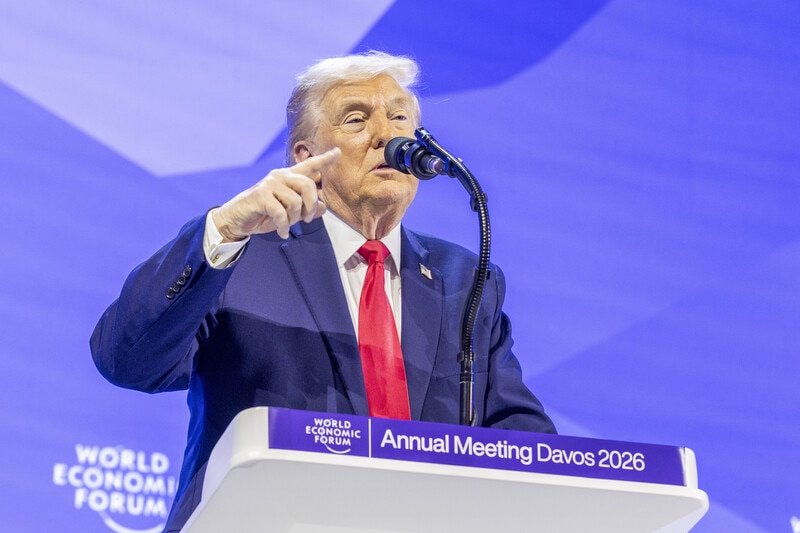
Washington, D.C. — February 24, 2026 – President Donald Trump delivered his first State of the Union address of his second term Tuesday night, outlining a bold vision for America’s economic future while addressing growing concerns about artificial intelligence, global trade tensions, and workforce transformation.
Speaking before a joint session of Congress, Trump emphasized economic strength, national security, and technological dominance as the pillars of his administration’s agenda for the next four years. The address comes at a time when Americans are facing rising economic uncertainty, rapid technological disruption, and renewed geopolitical competition.
“This is the dawn of a new golden age for America,” Trump declared. “We are rebuilding our economy, securing our borders, and leading the world in innovation and artificial intelligence.”
Economic Growth Remains Central Focus
Trump highlighted recent economic indicators, pointing to steady job creation, manufacturing expansion, and increased domestic investment as signs of resilience despite global instability.
“Our economy is stronger than ever before,” he said. “We are bringing jobs back home, rebuilding American manufacturing, and putting American workers first.”
The president pointed to new investments in infrastructure, energy production, and technology sectors as critical drivers of economic growth. He also emphasized policies designed to reduce reliance on foreign supply chains, particularly in key industries such as semiconductors and critical minerals.
Economic analysts say Trump’s focus on domestic production reflects broader concerns about global supply chain vulnerabilities that became apparent during recent economic disruptions.
Artificial Intelligence Dominance a National Priority
Artificial intelligence emerged as one of the central themes of Trump’s address. He described AI as both an opportunity and a challenge, promising aggressive investment to ensure America remains the global leader.
“The country that dominates AI will dominate the future,” Trump said. “And that country will be the United States of America.”
The administration has proposed billions of dollars in funding for AI research, workforce training, and infrastructure development. Trump emphasized the importance of protecting American technological leadership against growing competition from China and other global rivals.
However, he also acknowledged the challenges posed by automation and AI-driven job displacement.
“We will ensure that American workers benefit from this revolution—not get left behind by it,” he added.
Experts say AI is already reshaping industries, including finance, healthcare, manufacturing, and media, forcing millions of workers to adapt to new roles.
Trade Policies and Tariffs Spark Debate
Trump also defended his administration’s recent tariff policies, which have drawn both praise and criticism from economists and global leaders.
“These tariffs are about protecting American workers,” Trump said. “For decades, other countries took advantage of the United States. Those days are over.”
The administration argues that tariffs will encourage domestic manufacturing and reduce trade imbalances. Critics, however, warn that escalating trade tensions could increase consumer prices and disrupt global markets.
Business leaders remain divided. Some industries support the tariffs as a way to level the playing field, while others fear retaliation from foreign governments.
Workforce Transformation and Job Creation
Trump acknowledged growing concerns about job displacement caused by automation, artificial intelligence, and technological change. He pledged new initiatives aimed at workforce retraining and education.
“We are investing in the American worker like never before,” he said. “We will train our citizens for the jobs of tomorrow.”
The administration plans to expand vocational training programs, technology education, and partnerships with private companies to prepare workers for emerging industries.
Economists say workforce transformation will remain one of the defining economic challenges of the next decade.
National Security and Global Leadership
National security was another key theme of the address. Trump emphasized military strength, border security, and America’s global influence.
“We are restoring respect for the United States around the world,” he said. “America is strong again.”
He also highlighted investments in defense technology, cybersecurity, and space exploration.
The president warned that global competition, particularly in technology and economic power, will shape the future international order.
Political Reactions Highlight Deep Divisions
The speech drew mixed reactions from lawmakers on both sides of the political aisle.
Republicans applauded Trump’s emphasis on economic growth and national strength, while many Democrats criticized his trade policies and immigration stance.
Some lawmakers expressed concerns about the long-term impact of tariffs and automation on American workers.
Political analysts say the speech reflects broader divisions in American politics, particularly as the country approaches future election cycles.
Impact on Markets and Businesses
Financial markets reacted cautiously ahead of the address, with investors closely watching for signals on economic policy, interest rates, and regulatory changes.
Technology companies, in particular, are expected to benefit from increased government investment in artificial intelligence and innovation.
Manufacturing and infrastructure sectors may also see significant growth if Trump’s domestic investment plans move forward.
However, uncertainty surrounding trade policies continues to create volatility in global markets.
What This Means for Americans
Trump’s State of the Union address signals a clear focus on economic nationalism, technological leadership, and workforce transformation.
Key takeaways include:
-
Increased investment in artificial intelligence and technology
-
Continued emphasis on domestic manufacturing
-
Expansion of workforce training programs
-
Stronger trade protections through tariffs
-
Focus on national security and global competition
For American workers, businesses, and investors, these policies could shape economic conditions for years to come.
The Road Ahead
Trump’s address sets the tone for his second term and outlines an ambitious agenda focused on strengthening America’s economy and global leadership.
While supporters see his policies as essential for protecting American interests, critics warn about potential risks, including trade conflicts and technological disruption.
The success of Trump’s agenda will depend largely on economic performance, technological innovation, and political cooperation in the months ahead.
As America navigates rapid change, one thing is clear: the intersection of economics, technology, and global competition will define the nation’s future.
Conclusion
President Trump’s 2026 State of the Union address reflects a pivotal moment for the United States. With artificial intelligence transforming industries, global trade tensions rising, and economic uncertainty lingering, the administration’s policies will play a critical role in shaping America’s future.
Whether these strategies lead to sustained growth and technological leadership—or new economic challenges—remains to be seen.
For now, Trump has made his priorities clear: economic strength, technological dominance, and putting America first.
About The Author