


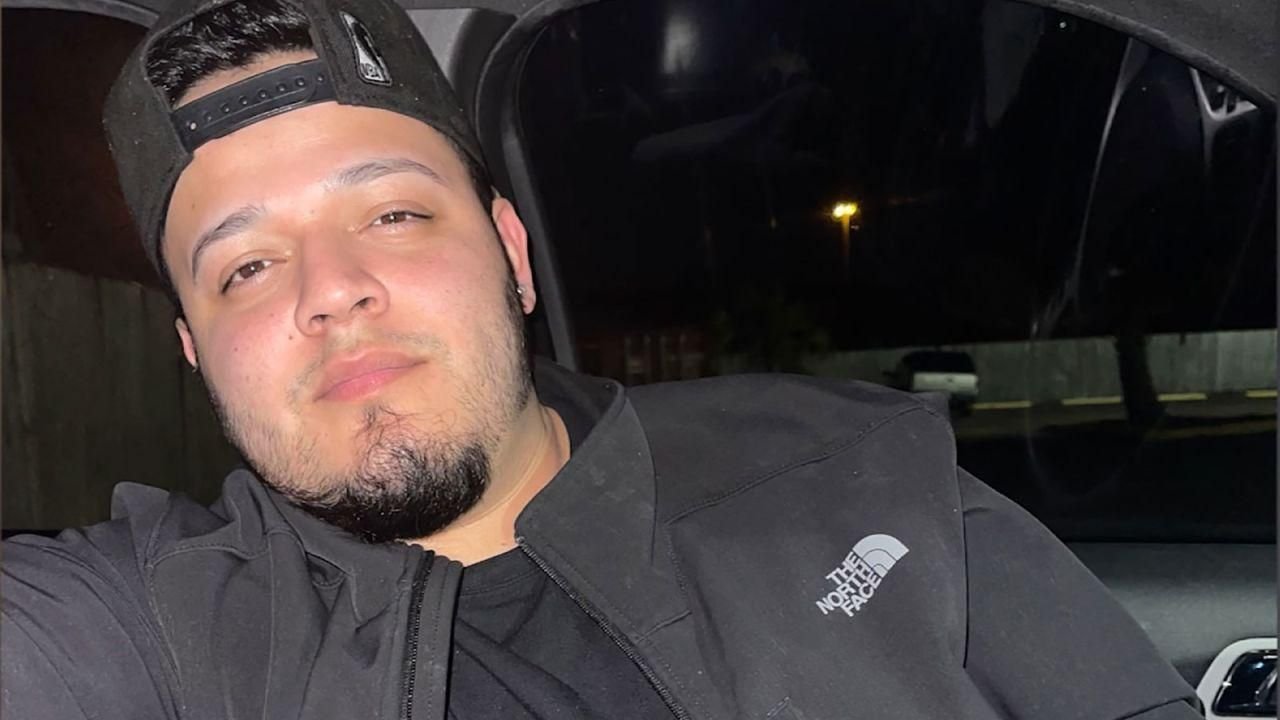
NEW YORK (Dec. 11, 2025) — In a stunning conclusion to one of the most convoluted immigration cases of the year, a U.S. District Court judge has ordered the immediate release of Kilmar Abrego Garcia from federal custody.
Garcia, a Salvadoran national who gained national attention following his April 2024 arrest alongside the controversial TikTok “migrant influencer” Leonel Moreno, is expected to be released within 48 hours. The ruling, delivered Thursday morning, serves as a sharp rebuke to the Department of Homeland Security (DHS), with the court declaring Garcia’s prolonged incarceration a violation of his due process rights.
The Ruling: “An Unconstitutional Limbo”
In a 35-page opinion, the federal judge granted Garcia’s petition for a writ of habeas corpus, effectively ending his detention. The court found that the government had failed to provide a constitutionally adequate justification for holding Garcia indefinitely, particularly after criminal charges related to human smuggling largely evaporated due to a lack of evidence.
” The Constitution does not permit the government to hold a civil detainee in an endless loop of administrative delays and retracted charges,” the judge wrote. “Mr. Abrego Garcia has been bounced between countries, prisons, and legal classifications without a definitive path to trial or deportation. This is the definition of indefinite detention, and it ends today.”
Under the terms of the release, Garcia will be required to wear a GPS ankle monitor and report weekly to an Immigration and Customs Enforcement (ICE) field office while his asylum claim is adjudicated.
Guilt by Association: The Leonel Moreno Connection
Garcia’s legal troubles began in April 2024, when he was arrested in Gahanna, Ohio, during a high-profile ICE operation targeting Leonel Moreno. Moreno had become a viral sensation—and a lightning rod for immigration debate—after posting TikTok videos encouraging migrants to squat in American homes and flaunting stacks of cash he claimed were government handouts.
While Moreno was the primary target, Garcia was found in the same vehicle and taken into custody. Unlike Moreno, who faced federal firearms charges and was eventually deported to Venezuela in early 2025, Garcia’s path through the justice system was far more erratic.
For months, Garcia was labeled in the media primarily as Moreno’s “associate,” a tag his defense attorneys argued prejudiced his treatment by authorities. “He was guilty of sitting in a passenger seat, not of the viral stunts performed by someone else,” said Garcia’s lead attorney, Simon Sandoval-Moshenberg.
A Legal Rollercoaster: Deported, Returned, and Charged
The road to today’s release was paved with extraordinary legal errors. In March 2025, Garcia was deported to El Salvador and placed in the notorious CECOT mega-prison, despite having an active “withholding of removal” order—a special protection granted to migrants likely to face persecution in their home countries.
The deportation triggered a firestorm. In a rare move, the U.S. Supreme Court intervened in April 2025, ordering the federal government to “facilitate” Garcia’s return to the United States, ruling that his removal had been a violation of a lower court’s stay.
Garcia was flown back to the U.S. in June 2025, only to be immediately arrested by federal agents on new charges of human smuggling stemming from a 2022 traffic stop in Tennessee. Prosecutors alleged he had transported undocumented migrants for financial gain. However, the case crumbled over the summer when evidence revealed inconsistencies in police reports and a lack of proof that Garcia was the ringleader of any smuggling operation.
The “MS-13” Allegations
Throughout his detention, DHS officials repeatedly characterized Garcia as a danger to the community, citing police reports that alleged he had ties to the MS-13 gang. The government pointed to tattoos and his attire at the time of his initial arrest—specifically a Chicago Bulls hat, which some gang units classify as gang signage—as evidence of his affiliation.
However, the federal judge dismissed these claims in Thursday’s ruling, noting that no concrete evidence of gang activity or criminal convictions had ever been presented.
“The government cannot rely on inference and apparel to justify the indefinite deprivation of liberty,” the ruling stated. “After twenty months of investigation, the state has failed to produce a single criminal conviction.”
What Happens Next?
The Department of Justice has not yet indicated whether it will appeal the release order. For now, Garcia remains in the United States, where he will continue to fight for asylum. His case has become a rallying point for civil rights advocates, who argue it highlights the systemic failures and “guilt-by-association” tactics often used in high-profile immigration enforcement operations.
Meanwhile, the saga of the “migrant influencer” circle seems to have drawn to a close, with Moreno in Venezuela and his alleged accomplice now free on American soil, awaiting a final decision on his future.
About The Author