

CHARLOTTE, N.C. — The legal battle that threatened to tear apart the fabric of American stock car racing has come to a sudden and historic halt. On Thursday, NASCAR reached a settlement with 23XI Racing—co-owned by NBA legend Michael Jordan and driver Denny Hamlin—and Front Row Motorsports, ending a bitter federal antitrust lawsuit just as it was reaching its climax.
The resolution, announced on the ninth day of the trial, brings an end to a 14-month standoff that pitted the sport’s sanctioning body against two of its most prominent teams. At the heart of the deal is a significant concession that could reshape the business model of the sport: the introduction of “evergreen” charters.
The Scene in the Courtroom
The settlement arrived with dramatic flair. U.S. District Judge Kenneth Bell had prepared to hear motions on Thursday morning but instead called for an hour-long sidebar. When the parties emerged, the tone had shifted from adversarial to cooperative.
Jeffrey Kessler, the high-profile sports attorney representing the teams, broke the news to the court: “I’m pleased to say the parties have positively settled this matter in a way that will benefit the industry going forward.”
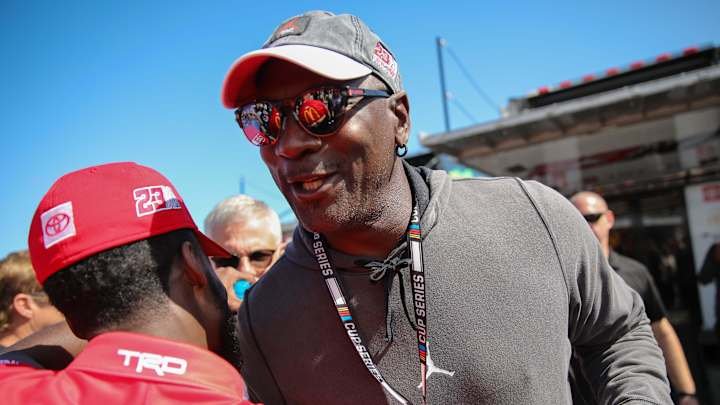
Michael Jordan, who had testified earlier in the week about his desire to “challenge the entity” for the betterment of the sport, was seen smiling in the gallery. “Today’s a good day,” Jordan remarked as he waited for the official announcement.
Judge Bell, clearly relieved that the jury would not have to decide the fate of a multi-billion-dollar industry, praised the outcome. “I believe this is great for NASCAR,” Bell said. “Great for the future of NASCAR. Great for the entity of NASCAR. Great for the teams and ultimately great for the fans.”
The “Evergreen” Compromise: A Win for Stability
While the financial terms of the settlement remain confidential, the structural changes it triggers are public and profound. The joint statement released by NASCAR and the teams confirmed that the sanctioning body will issue an amendment to all existing charter holders.
The key provision is the inclusion of “evergreen” charters.
For years, teams have operated under renewable charter agreements—essentially franchises that guaranteed entry into races and a share of the revenue. However, these agreements had expiration dates, leaving team owners fearful that their multi-million dollar investments could vanish if NASCAR decided not to renew them.
The new “evergreen” clause effectively grants teams the permanent stability they fought for. While subject to “mutual agreement” and likely tied to performance and participation clauses (such as running every race), this structure means teams no longer have to fear losing their charter status arbitrarily at the end of a contract cycle. This move aligns NASCAR more closely with other major sports leagues like the NBA or NFL, where franchise rights are permanent assets.
Why They Sued: The “Take It or Leave It” Offer
The conflict began in September 2024, when NASCAR presented teams with a final charter agreement for the 2025-2031 seasons. The offer came with a strict deadline and was described by team owners as “coercive” and “take-it-or-leave-it.”
While 13 of the 15 chartered teams signed the agreement—many citing fear of losing their business—23XI Racing and Front Row Motorsports refused. They argued that the deal did not provide fair revenue sharing or long-term security. Instead of signing, they filed an antitrust lawsuit, accusing NASCAR of acting as an illegal monopoly that bullied teams and strangled competition.
The teams raced the majority of the 2025 season as “open” entries, meaning they had no guaranteed spots in races and missed out on the lucrative revenue sharing that chartered teams enjoy. This “uncharted” status cost them millions in potential earnings, a financial bleeding edge they were willing to endure to force a change.
The Trial Drama
Before the settlement, the trial provided a rare glimpse behind the curtain of NASCAR’s closely guarded business.
-
Hamlin’s Tears: On the opening day, Denny Hamlin broke down on the stand, describing how he leveraged his family’s financial future to build his racing career, emphasizing that the lawsuit was about protecting that legacy.
-
Jordan’s Stand: Michael Jordan took the stand to explain his involvement. “I felt I could challenge NASCAR as a whole,” he testified. “I wanted a partnership, and permanent charters weren’t even a consideration [by NASCAR].”
-
NASCAR’s Defense: Chairman Jim France and other executives argued that they had negotiated in good faith and that the teams simply wanted a bigger slice of the pie than was sustainable for the sport.
Implications for the Future
This settlement is widely seen as a victory for the teams, validating their risky decision to hold out. By securing “evergreen” status not just for themselves but for all charter holders, 23XI and Front Row have fundamentally altered the power dynamic of the sport.
“This resolution reflects our shared commitment to maintaining a fair and equitable framework for long-term participation in America’s premier motorsport,” the joint statement read.
With the legal distraction removed, the focus now returns to the track. The agreement ensures that 23XI and Front Row will regain their chartered status, guaranteeing their cars—including those driven by stars like Bubba Wallace and Tyler Reddick—will be on the grid for every race, competing under a business model that finally offers the security they demanded.
About The Author