


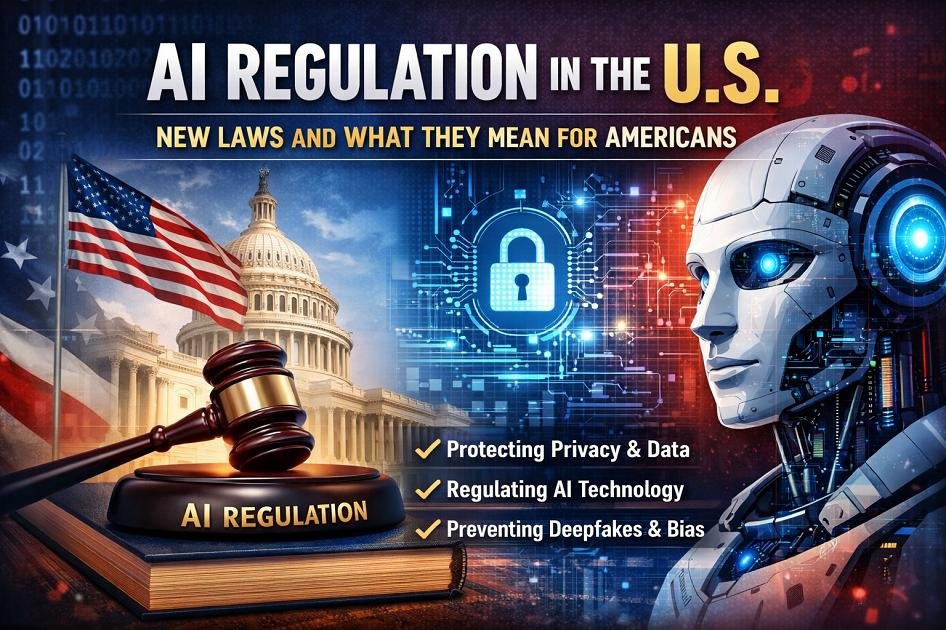
WASHINGTON, D.C. — Artificial intelligence is rapidly transforming industries across the United States, from healthcare and banking to hiring and education. As AI adoption accelerates, lawmakers at both the federal and state levels are introducing new regulations to ensure the technology is used safely, transparently, and fairly.
These new laws are expected to significantly impact businesses, workers, and consumers, marking a major shift in how artificial intelligence is governed in America.
Federal Government Moves to Strengthen AI Oversight
The U.S. federal government has taken major steps toward regulating artificial intelligence through executive orders and agency oversight. Federal regulators are focusing on preventing discrimination, protecting consumer privacy, and ensuring companies use AI responsibly.
Agencies such as the Federal Trade Commission (FTC) and Department of Justice are already applying existing laws to AI systems, particularly in areas involving consumer protection and fair competition.
Government officials say these efforts are designed to balance innovation with public safety, ensuring the United States remains a global leader in AI while protecting citizens.
States Introduce New Artificial Intelligence Laws
In the absence of a single nationwide AI law, several states have introduced their own regulations.
States like California and Colorado have passed laws requiring companies to evaluate AI systems for potential bias, especially in employment, housing, and financial decisions. These regulations aim to prevent AI from unfairly discriminating against individuals.
Other states are requiring companies to disclose when AI is being used to make important decisions, increasing transparency for consumers.
Deepfake and Privacy Protections Expand
One major focus of new legislation is protecting Americans from harmful AI-generated content, including deepfakes and identity misuse.
New laws require technology platforms to remove harmful AI-generated content, including non-consensual deepfake images and videos. Lawmakers say these protections are critical as AI-generated content becomes more realistic and widespread.
Privacy protections are also expanding, with increased scrutiny on how companies collect and use personal data to train artificial intelligence systems.
Major Impact on Businesses and Technology Companies
Technology companies and businesses that use AI are now facing stricter compliance requirements. Many companies are investing heavily in AI safety systems, risk assessments, and transparency measures.
Experts say companies that fail to comply with new regulations could face legal consequences, including fines and lawsuits.
This regulatory shift is expected to reshape how artificial intelligence is developed and deployed across industries.
What the New AI Laws Mean for Americans
The new regulations could affect Americans in several key ways:
-
Increased protection from AI-driven discrimination
-
Stronger privacy safeguards
-
Protection against deepfake scams and identity misuse
-
Greater transparency about how AI systems make decisions
-
Improved safety and accountability for AI technologies
These changes are intended to ensure AI benefits society while minimizing risks.
The Future of AI Regulation in America
Experts believe AI regulation will continue evolving rapidly as the technology becomes more advanced and widely used.
Lawmakers are expected to introduce additional legislation to address emerging risks while supporting innovation and economic growth.
The United States is entering a new era of artificial intelligence oversight, with regulations playing a critical role in shaping the future of technology and protecting citizens.
About The Author