


After years of threatening to disrupt industries around the world, artificial intelligence could soon enter the halls of power, if a marginal political formation in Japan gets its way.
The emerging Renaissance party unveiled plans earlier this week to install a chatbot penguin as its “AI leader,” after disappointing election results prompted its founder to step down.
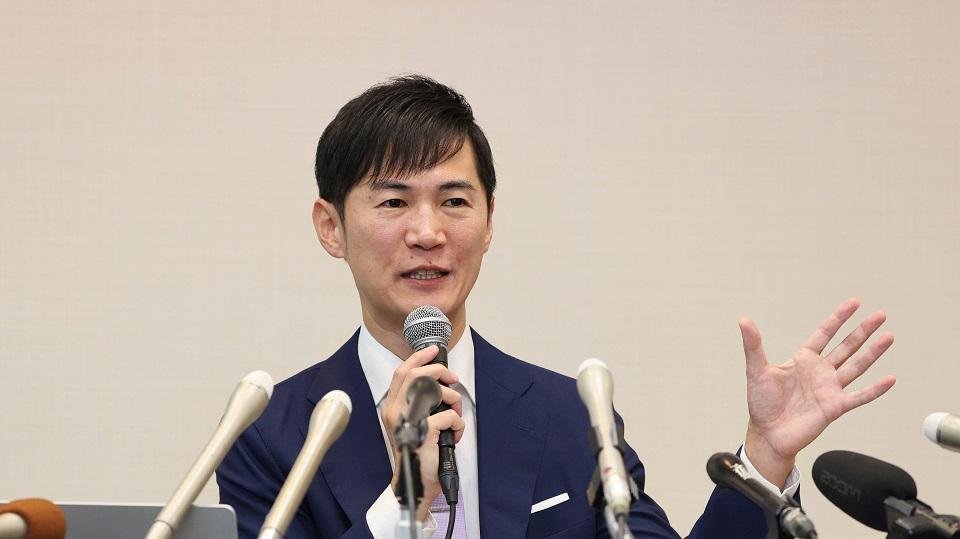
Human candidate Koki Okumura won the race for leadership, but the doctoral student, who specializes in AI research, announced at a press conference earlier this week that he has another plan.
“The new leader will be AI,” the 25-year-old student at Kyoto University said, describing himself as his assistant.
“The party will entrust decision-making to AI.”
The new figure will take the form of an avatar penguin, a nod to the Japanese’ love for animals, Okumura said. However, he will not run for election, as electoral law requires candidates to be Japanese citizens.
“Legally, the representative must be a natural person, so formally a human serves as a representative,” he explained.
Okumura told CNN that he imagines that AI will eventually take over all decision-making processes related to party operations.
“I think it has the potential to achieve results more accurately than humans. This approach allows us to carefully consider voices that are often ignored by humans, potentially creating a more inclusive and humane environment for political participation.”
There is no timeline for the rise of AI in the job, although Okumura pointed out that a preparatory committee is being formed. The appearance of the penguin has not been revealed either.
The party, which, according to its website, is based on the belief that anyone interested in politics should have a chance, was launched in January by Shinji Ishimaru, former mayor of Akitakata, a city of nearly 26,000 people in western Japan.
Ishimaru rose to fame after finishing second in the Tokyo governorship election last year, thanks to a successful online campaign. However, he resigned from the party leadership in August after failing to win any seats either in the elections to the local assembly of the capital or in the elections to the national upper house earlier this year. It was presented at more than 50 seats in total.
While scheduled political penguins may not be what they had in mind, the Japanese government has stepped up efforts to encourage the use of AI in recent years, which experts say may be key to mitigating the decline of the aging nation’s workforce.
Several government departments have adopted artificial intelligence technology to help with aspects of work, from administrative tasks to partnering and detecting abandoned homes, but none to the extent Okumura suggests for their party.
Observers have expressed reservations about Okumura’s plan, saying that, as a real penguin, it could have a hard time taking off.
Hiroshi Shiratori, a political science professor at Tokyo’s Hosei University, believes Japanese voters are not prepared for an AI-dependent party.

“Voters choose the person they can trust and also choose the party that reflects the popular feeling,” he told CNN. “AI is totally independent of that.”
He argues that the Okumura experiment is unlikely to become a broader trend, stating that Japan is a pluralistic democracy that values diversity of opinions.
If political parties let AI make all the decisions, the professor said, all parties could end up being similar, if not equal, and called it “undemocratic by nature.”
Okumura is not the first to try to put artificial intelligence in a political office.
Last year, Victor Miller, a candidate for mayor of Cheyenne, Wyoming, inscribed his VIC artificial intelligence chatbot on the ballot, while a man in the UK ran for a parliamentary election in the southern city of Brighton as the AI Steve, also planning to delegate authority to a neural network.
Both men, whose models initially worked on ChatGPT, said they saw in AI the main advantages of inventiveness and the ability to communicate with the public at any time of the day.
His actions led ChatGPT owner OpenAI to cut off his access to software, while Wyoming officials issued a reminder that an “AI bot is not a qualified voter.”
Thomas Ferretti, a senior lecturer in ethics and sustainable business at the University of Greenwich in the UK, says that while AI technologies can accelerate data analytics and increase government efficiency, they cannot make policy decisions on their own and risk becoming an ethical problem.
“If AI systems are helping political decisions, the problem is that people have different values and disagree about what our social goals should be,” he told CNN.
Theodore Lechterman, UNESCO Professor of AI Ethics and Governance at IE University in Spain, also stated that the relationship between politicians and voters goes beyond mere delegation of power.
“We expect human politicians to act autonomously, taking action on their own initiative and operating in a physical and social world, where they must interact with other politicians and voters, examine conditions on the ground, attend ceremonies, and more,” he told CNN.
He said any use of AI should be “deliberately, honestly and transparently addressed” and that it is important for voters not to forget who will be responsible.
But for Okumura, the important thing is to be both a pioneer and to participate politically.
We are heading towards a world where we will interact with AI. If that happens, how should we proceed with the social and political systems that have been taken for granted so far? he asked during the press conference.
“We want to be the first to perform that experiment at the forefront,” he said.
About The Author